
AI made writing code cheaper; many teams still run the same ritual: backlog, sprint, PR, review. The difference: PRs arrive faster, but if "what to build" stays vague, speed is just acceleration in the wrong direction.
The shift I've seen lately is clear: engineering says "ready to ship" while product says "not defined yet". Implementation used to lag; now implementation waits on the spec. Agents don't fix ambiguity — they amplify it.
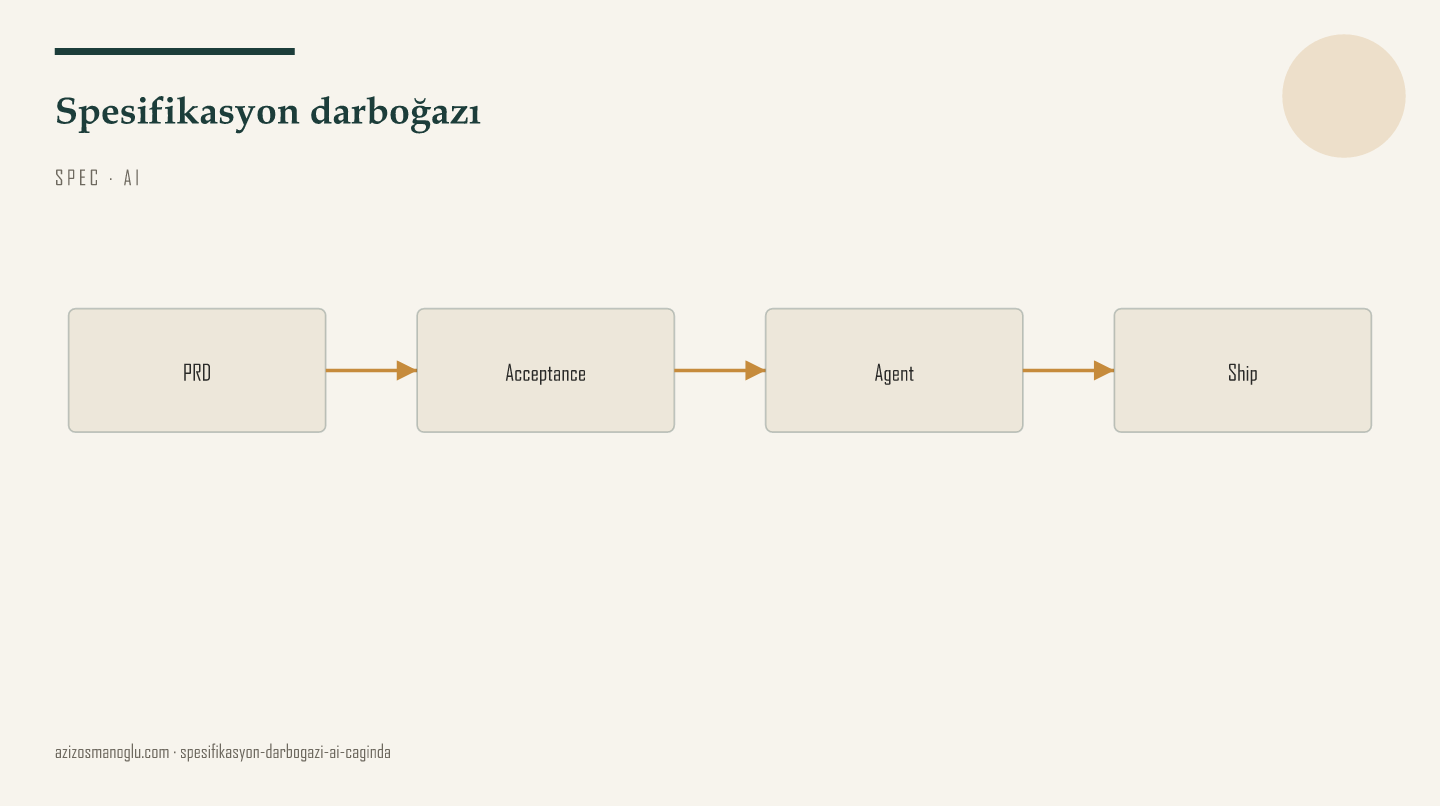 Humans fill gaps from context: ask on Slack, assume, iterate. Agents take text literally. Missing acceptance criteria become wrong edge cases — caught in review, or in production. Take "Apply coupon": stackable? minimum cart? refund on cancel? A human asks; an agent codes defaults; QA loses three days.
Given/When/Then isn't trendy; it works — especially for e-commerce: stock, idempotency, payment state, email side effects. API contract first — OpenAPI or a minimal endpoint table — before agents get "this DTO, these error codes". A Figma screen isn't a spec; state transitions, empty states, error copy must be written.
PMs can prototype; designers can push commits — fine. Engineers spend more time on system definition and invariants. Line count isn't the KPI; correct behavior merged first try is. Every feature defines done: tests, metrics, rollback; ambiguous items stay "needs spec", not sprint-ready.
AI sped up implementation; clear thinking is still human work. The costliest mistake isn't wrong code — it's the wrong problem statement.